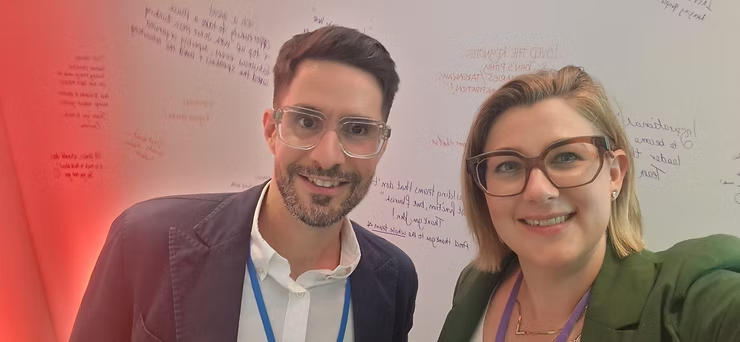
June 2025 brought together several threads of Synthosys work: research on culture and team dynamics, discussion about women in leadership and a keynote on sustainable high performance.
Across different rooms and audiences, the same challenge kept appearing. Organisations can talk confidently about values and performance while missing the everyday conditions that make those ambitions possible.
Women in leadership: culture shapes opportunity
At the Enterprising Women summer networking event and a subsequent webinar on women’s leadership, discussions turned to the expectations and biases that shape who is heard, supported and promoted.
The conversations made an important distinction. Confidence and individual development matter, but they cannot compensate for workplace structures that continue to reproduce the same barriers.
This is why leadership development needs to consider both the individual and the system in which they work.
Research enters the conversation
In June, the 4C Model was published in the Organization Development Review. The article brought Synthosys’s approach to culture and team dynamics into a professional research publication.
The model examines culture alongside how people experience clarity, consistency, collaboration and collective follow-through. That combination matters because agreement about values does not always translate into effective daily work.
High performance that can last
At Leadership Live 2025 in London, Synthosys challenged the assumption that impressive results necessarily indicate a healthy team. A team may be delivering at a high level while operating under unsustainable pressure.
The keynote connected performance with trust, clarity and adaptability. The aim is not to remove challenge, but to understand which working patterns help teams respond to it without exhausting their capacity.
Seen together, the June discussions point towards one practical discipline: examine how work is actually experienced before deciding what needs fixing.