
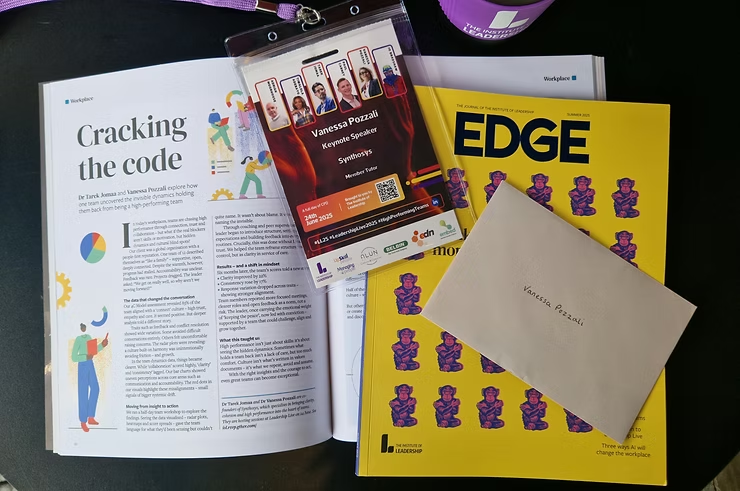
A team can feel close, supportive and deeply connected, yet still struggle to get things done. That was the tension explored in an EDGE Magazine feature by Dr Tarek Jomaa and Dr Vanessa Pozzali.
The article followed a group that described itself as a family. The 4C Model helped the team look beyond that shared identity to the habits affecting everyday work.
What the diagnosis made visible
The team placed a high value on relationships. Beneath that positive picture, however, the diagnostic identified differences in how people experienced feedback, accountability and consistent ways of working.
Some difficult conversations were avoided in the interest of harmony. The result was a team with good intentions but uneven follow-through.
From insight to a different way of working
The published case described a facilitated team workshop, leadership coaching and structured reflection to help the group address these patterns.
In a follow-up six months later, the article reported improvements in clarity and consistency, alongside clearer roles and more open feedback. Those findings relate to this specific team and should not be treated as a guarantee of results elsewhere.
The useful lesson is that the strength of a team is not determined by how warmly its members describe one another. It also depends on their ability to challenge, decide and act together.